

Addiction and Mental Health Seminar for Teens Hosted by Elim Counseling Center and TYP. The presentation promoted awareness and understanding of America’s addiction crisis.
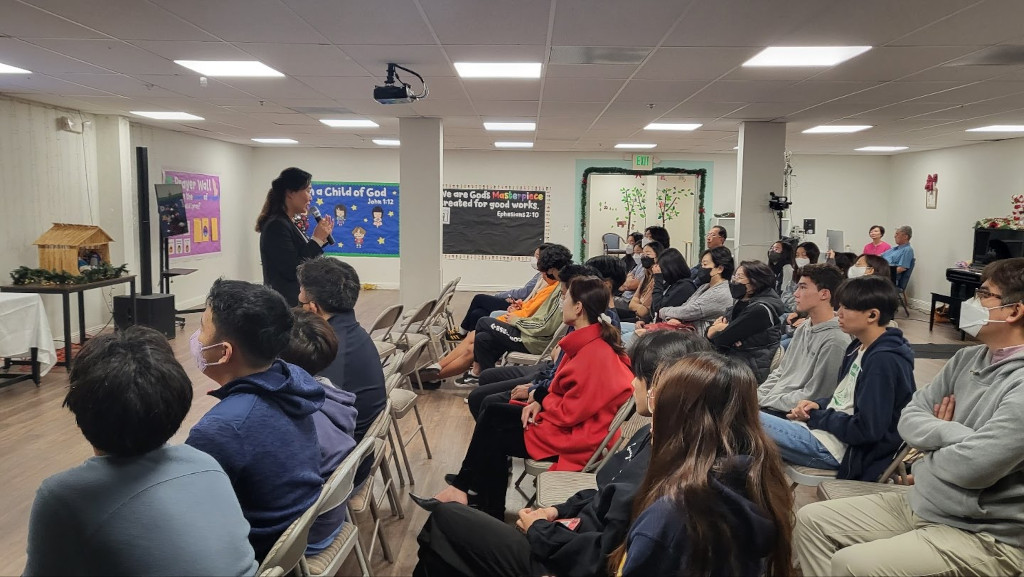
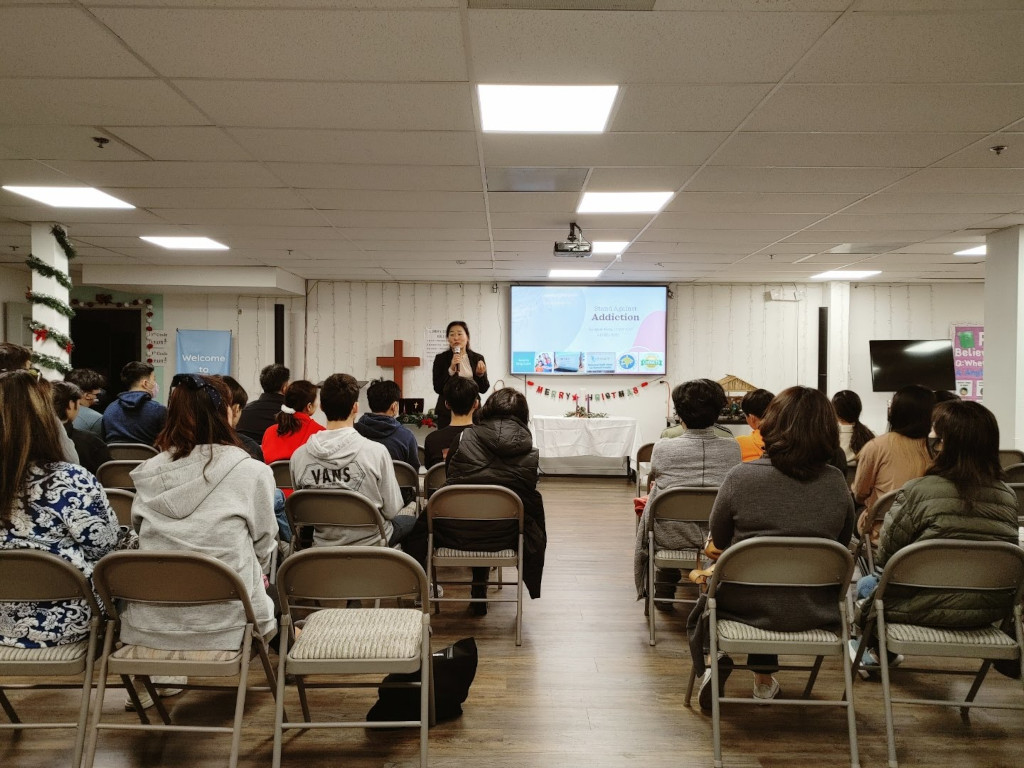
Youngson Kwon, LCMC, CAS, presented drug and gaming addictions as medical disorders in an youth addiction seminar co-sponsored by Elim Counseling Center and Total Youth Productions (TYP) at Korean United Methodist Church on November 27th, 2022. Kwon explained that addiction is a neurological disorder in which brains exposed to unnaturally high amounts of dopamine develop neural pathways that make a person dependent on that unhealthy dopamine source. “Addiction is a mental disorder,” says Gene Chang, seminar attendee and vice president of TYP, “and there are factors that can be medically treated and change how you react to it”. Addiction pathways can’t be reversed, but new pathways can be developed and addiction symptoms can be managed. Addiction is not a choice or a moral flaw. A person who develops an addiction does so to one’s suffering. Kwon simplified the DSM 5 definition of addiction into three criteria: dependence on addiction, inability to control addiction, and continued abuse despite negative consequences. One must meet at least two of Kwon’s criteria to be diagnosed with an addiction disorder. By this definition, addiction is neither a choice nor desirable to the victim. Kwon emphasized the importance of detecting and treating early addiction. Addiction is often uncontrollable without medical intervention, therefore early treatment is crucial. A misbehavior is medically classifiable as an addiction as long as it meets two out of the three aforementioned criteria. As an example, Kwon described that a youth who compulsively games meets the criteria if he suffers academically (negative consequences) and sets himself a time limit but cannot meet it (inability to control). Mild cases of addiction such as these should be treated because early addiction has a better response to intervention compared to struggling with a possibly worser case in the future. As Lynn Choi, president of TYP, says, “It’s different in the way that we usually talk about [addiction]. We often talk about it in terms of hard drugs, really serious situations, but this [seminar] went more in-depth into milder cases and how a person builds up to that level of severity. It was an interesting and informative experience.” “Seeing addiction presented as a treatable medical disorder instead of a personal failing was a new light,” summarizes Sophie Park, vice president of TYP.



 totalyouthproductions.org